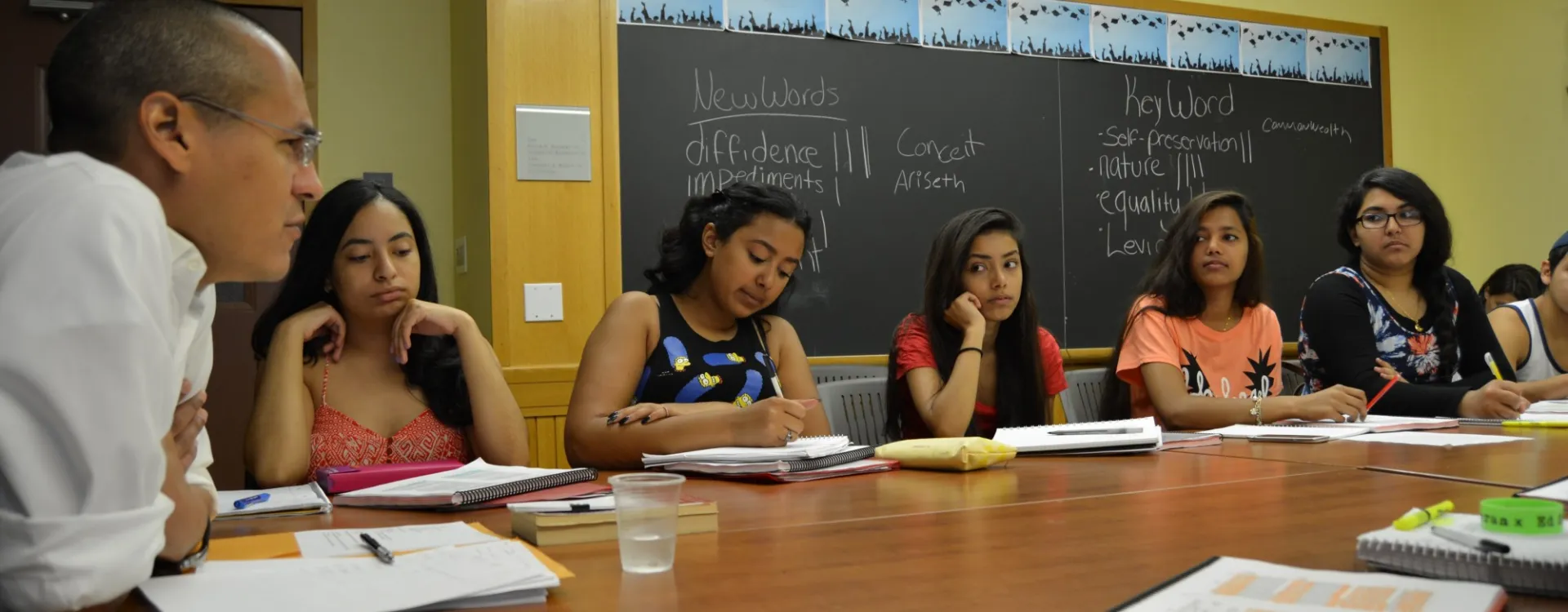
Academic Enrichment
The Double Discovery Center recognizes that a young person’s readiness for college success (e.g. degree attainment) is directly linked to the extent to which they are proficient and can demonstrate intellectual rigor. While 75% of all postsecondary institutions admit qualified candidates, only a third of admitted students have a four-year graduation rate from the institutions in which they enroll as first year students; and more than 600,000 leave college before receiving a degree or take longer than four years to graduate.1 According to Complete College America, an additional year in a public four-year college can cost $22,826. When coupled with an average loss of salary earnings of $45,327, the cost of NOT being college ready can total at least $68,153 for each additional year.2
With this in mind, DDC’s academic enrichment programming is designed to address three core questions:
- How does the course/activity contribute to students’ acquisition of the knowledge and skills necessary to meet a defined set of college-ready standards of skills and knowledge?
- How does this course/activity develop the intellectual rigor of students through developmentally appropriate strategies (e.g. instructional scaffolds that intentionally lead to independent practice)?
- How does this course/activity use instructional pacing that allows students to complete an embedded standards-aligned culminating project whereby they can demonstrate their proficiency in a defined set of college-ready standards of skills and knowledge?
Our Objectives
Humanities
Improve students’ skills in the reading, writing, and speaking. Develop their ability to think critically and comparatively to provide a well-supported synthesis and analysis of information from multiple sources. Build students’ enthusiasm and stamina for literacy activities (e.g. reading, writing, and speaking).
STEM
Increase students’ conceptual and procedural knowledge as well as their problem-solving skills in Algebra. Build their knowledge & skills around STEM (including the scientific method) content so they can apply their new understandings in real-world, problem-solving settings. Provide exposures that build students’ understanding of the world of STEM careers.
Arts
Bolster students’ exposure to cultural resources by engaging them in new art and art making forms to provide them with opportunities for creative exploration of academic and non-academic topics and help them to make connections with the world of art.
Footnotes
1 Conley
2 Complete College America report