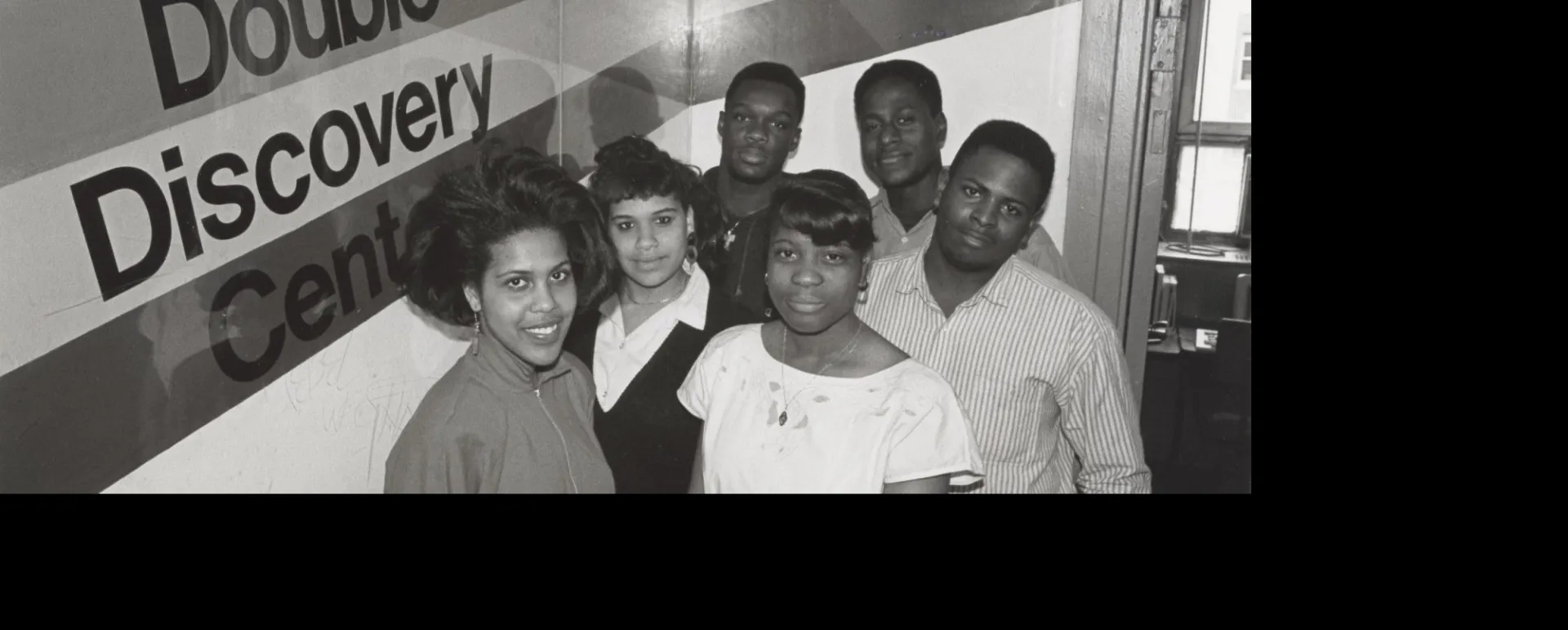
History - Cloned
DDC was established in 1965 by Columbia and Barnard undergraduates who recognized an opportunity to expose nearby low-income high school students from Harlem and Washington Heights to the rigor of Ivy League education.
The founders, however, quickly discovered that they, too, were exposed to valuable learning — a deeper understanding of the rich histories, experiences, and perspectives of the low-income students and families they sought to help.
This double discovery is at the heart of the program’s decades of success that has inspired hundreds of college access programs across the country. It continues to empower historically under-resourced communities with skills and strategies for life-long learning while inviting Columbia student volunteers to challenge themselves and learn through community engagement.
Timeline
- 1965: Columbia and Barnard undergraduates launch DDC i as Project Double Discovery (PDD).
- 1965: 160 low-income high school students from Harlem enroll in PDD’s summer academic program.
- 1968: PDD’s TRIO Upward Bound (UB) program is expanded to a full year of academic programming.
- 1977: PDD implements its Talent Search (TS) program.
- 1984: A Board of Friends is established to oversee PDD’s services and ensure its long-term success.
- 1985: PDD officially changes its name to the Double Discovery Center (DDC).
- 1998: President Bill Clinton praises DDC programs, which reduce racial disparities through education.
- Present: DDC Continues its exceptional research-base and innovative approach to education for low-income, first-generation community youth to prepare them for challenges in and out of the classroom.