Having lost its federal funding, Columbia’s Double Discovery Center searches for new routes of support
The Department of Education cut its funding to the Roger Lehecka Double Discovery Center in March, which has not been reinstated despite the University’s deal with the federal government.
For 60 years, the Roger Lehecka Double Discovery Center has helped over 25,000 low-income high school students from Harlem and Washington Heights navigate educational barriers by offering a variety of academic enrichment and mentorship programs, from teaching math courses on campus to helping students write their college essays.
On March 7, executive director of the DDC Sasha Wells opened her inbox to a notification that the Department of Education had cut all of the center’s federal grants, which it had grown increasingly reliant on since its founding in 1965.
The DDC was one of many departments and projects at Columbia that saw its federal support slashed that day—President Donald Trump’s administration, citing Columbia’s “continued inaction in the face of persistent harassment of Jewish students,” cut $400 million in federal grants to the University, setting off a monthslong battle between Low Library and the White House over federal funding.
Though Columbia struck a deal with the federal government in July to restore most of its funding, the DDC remains without federal support today, leaving the center searching for new ways to communicate its mission and significance within the Columbia community as it works to keep afloat.
The DDC is housed at Columbia and geared toward students in Manhattan neighborhoods where the University has a campus—Morningside Heights, West Harlem, and Washington Heights. The center seeks to make higher education accessible to students who may not envision themselves in a traditional university setting.
“We want to be the bridge into Columbia, to demystify it, to make it a little bit more accessible, and to make it be a partner to help the community along,” Wells told Spectator. “Because that’s just going to benefit Columbia as well.”
Among the DDC’s federally funded programs was its national Upward Bound program, which aids first-generation and low-income high school students from the surrounding area with college advice and summer school programming. The DDC also received federal funding for its Talent Search program, which has brought volunteers and staff to local high schools to offer college access workshops within their school day programs since 1977. At its peak, the Talent Search program reached 737 local high school students, according to Wells.
While the program is housed at Columbia, it remains financially independent from the University, and—until March—was almost entirely dependent on funding from the Department of Education. The University’s July agreement with the federal government that restored a majority of its funding did not include the center’s funding.
Now, the DDC is looking to continue its mission that it has supported for 60 years—with or without federal grants.
History of the Double Discovery Center
Roger Lehecka, CC ’67, GSAS ’74, lecturer of American studies and former Columbia College dean of students, was a sophomore studying math when he first volunteered at Columbia. As an undergraduate, he volunteered for the Citizenship Program, Columbia and Barnard’s biggest volunteer program, which aimed to connect undergraduates with volunteer opportunities across schools, hospitals, community centers, and prisons.
“Columbia College and Barnard were both very much smaller then, but 1,200 students a year were part of one of their programs, which is a pretty amazing percentage,” Lehecka said in an interview with Spectator.
James Shenton, CC ’49, GSAS ’54, a history professor, played a key role in DDC’s founding. In early spring 1965, his former student, who worked for Sen. Robert Kennedy (D-N.Y.), informed Shenton of an anti-poverty program the federal government was interested in funding. Shelton then asked his students, including Lehecka and the other DDC co-founders, to create a proposal to submit to then-University President Grayson Kirk and the Office of Economic Opportunity, which oversaw the University’s own anti-poverty program.
“The thought that he would support this was vaguely preposterous,” Lehecka said about Kirk. “But the dean of the college was supportive, and Shenton thought it would work, so we did it.”
Since its inception, the DDC has largely relied on federal funding. After Kirk and the Office of Economic Opportunity approved the proposal, the program progressed quickly, and the students ran their first eight-week program in summer 1965.
By June 1977, the students received a grant from the federal government that accommodated 160 high school students in on-campus housing. The DDC co-founders hired college students to live in the residence halls and serve as counselors to the students. The University also hired a New York City high school principal to be program director and high school teachers to teach morning classes to ensure adults were involved with the DDC.
However, the DDC was primarily a student-led program helmed by Steven Weinberg, CC ’66, GSAPP ’68, who led the drafting of the proposal and shaped the summer program, Lehecka said. Lehecka received credit for the DDC because he continued his career at Columbia but, in reality, he said, he was Weinberg’s “number two.”
“It wasn’t a plan,” Lehecka said. “It wasn’t an ambition I had. It was just something that happened. I thought, at least for a few months, maybe it would be more important than studying math."
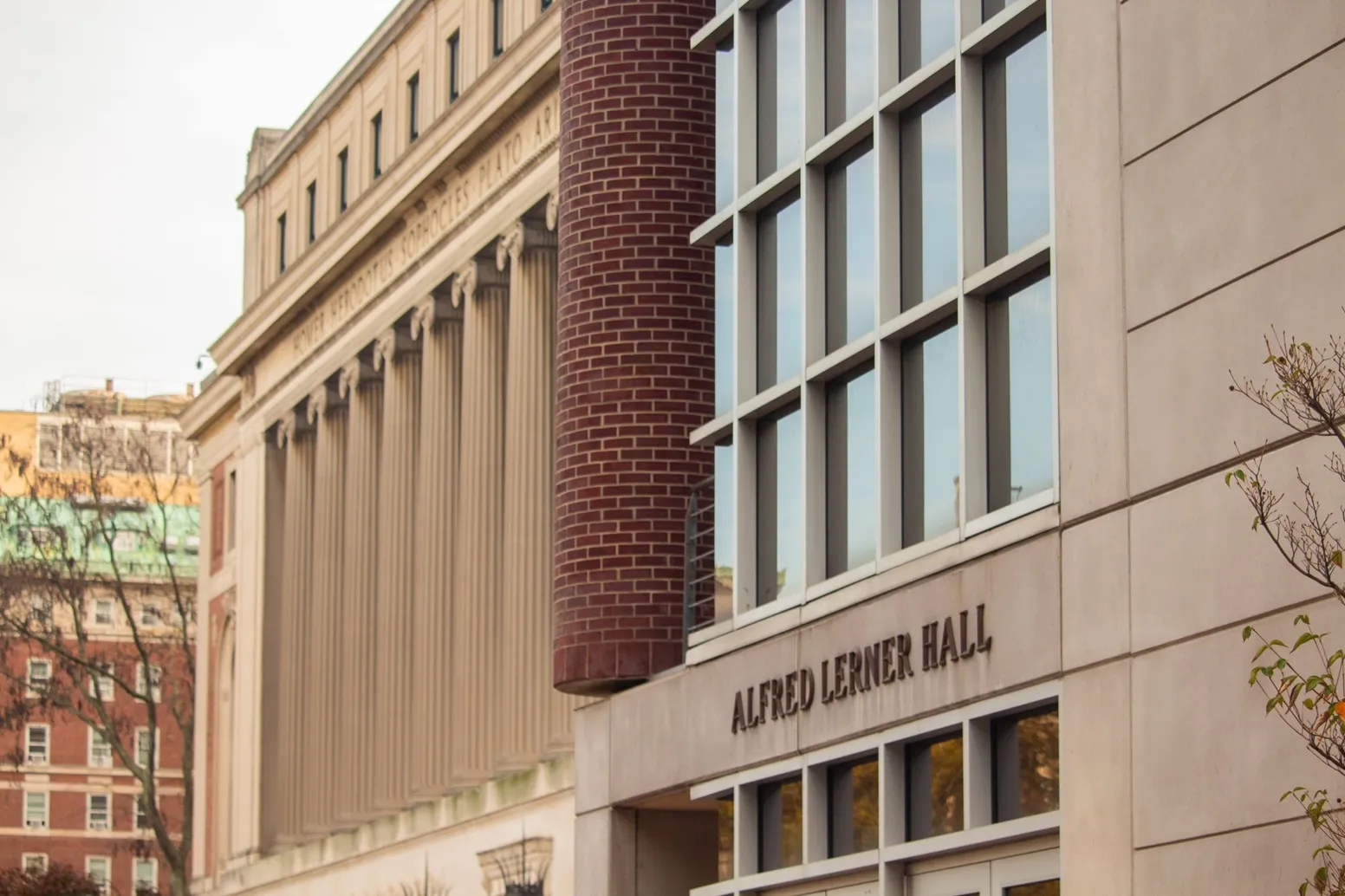
The DDC is located in 306 Lerner in Lerner Hall. The Citizenship Program, according to Lehecka, always had a space in the building, which is designated for student life and community-building programs. The current DDC space is simply a reconfiguration of the original Citizenship Program space, Lehecka said.
The DDC was first founded as Project Double Discovery. Ten years ago, at its 50th anniversary gala, an anonymous donor—the largest donor in the DDC’s history—donated “a significant amount of money” with the condition that Lehecka’s name be put on the door.
The evolution of the DDC
The most significant change to the DDC, according to Lehecka, was the program’s expansion from a summer session to operating year-round. Though the DDC accepted students from all five boroughs its first years after 1965, it did not originally have the resources to run the program the full calendar year.
“We had as many students from Staten Island as we did from Manhattan, and we weren’t set up to have a year-round activity,” Lehecka said.
This quickly changed. For the last 50 years, most students at the DDC have been either residents of Manhattan or attended high school in Manhattan. Though there are some exceptions for students who are willing and able to travel across boroughs, according to Lehecka, the center is particularly focused on neighborhoods where Columbia has a campus.
Lehecka said this shift “was a natural contraction once the program evolved to be more than a summer program.”
In the 1980s, at the 20-year mark of the program, DDC staff members began to reach out to local high schools to work on their campuses in addition to on-campus activities at the University.
Lehecka told Spectator that after its first four or five years, people started to recognize that the program “was not just going to go away.” With Columbia’s support, its leadership decided that the DDC needed “full-time, year-round administrative support,” Lehecka said.
That was the first decade the program director was not a student, Lehecka noted.
Although Lehecka recognizes the importance of student volunteerism in running the program, he said that the DDC would not have lasted as long as it has if students were singularly tasked with running it. Lehecka expressed that today, putting students in charge of the program would not be received as well by the University as it was in the 1960s.
“There would be less tolerance for students having that level of responsibility,” Lehecka said. “Universities are risk averse these days, in a way.”
Without funding from the federal government, the DDC will have to rely more on connecting with Columbia’s undergraduate community and partnering with student volunteers. Both Lehecka and Wells are confident that engagement from Columbia undergraduates will help the DDC make a bigger impact on its high school students.
“We want undergraduates here,” Wells said. “We want their leadership. We want their vision. We want their support.”
Funding: Then and now
Since its inception, the DDC’s federal funding has contributed to a portion of salaries for its full-time staff and academic programs.
The March federal cuts meant that the DDC had to let go of four full-time staff members and could no longer sustain its Upward Bound and Talent Search initiatives, which have been in place since the program’s founding. Today, the DDC offers its Saturday Academy—weekly courses on college aid for high school seniors—and plans to continue its summer school next year.
Wells told Spectator that the center’s operation originally included 14 full-time staff members when she joined in 2022.
That team is now down to six.
In August, the DDC was able to offer its summer programming with some spare funds; however, it had to cut on-campus housing for its 50 high school students. The reason for this decision was entirely financial, Wells and Lehecka said.
The federal cuts also revoked $388,000 in funding allocated for the DDC’s Project Start Right, a program announced in April 2024—less than a year before the cuts. According to Wells, the program, spearheaded by Sens. Chuck Schumer (D-N.Y.) and Kirsten Gillibrand (D-N.Y.)—offered counseling and advising to first-generation and low-income students attending college.
Wells explained that only about 23 percent of first-generation college students from low-income communities graduate, and “their dropout rate is about three times the rate of a regular student within the first two years.” According to a 2022 study, first-generation students additionally have a 92.2 percent higher dropout rate than their peers.
“We really wanted to adjust that, and we were really excited,” Wells explained.
Lehecka similarly said that the loss of Project Start Right’s funding is a huge hit to the DDC’s goals to help local students in the realm of higher education, from “something as simple as navigating financial aid” to deciding what to major in.
Schools in New York state like Queens College, Brooklyn College, Borough of Manhattan Community College, or the State University of New York colleges are restricted in the ways they can provide help to their students because of budget limitations, according to Lehecka. The federal grant for Project Start Right expanded the DDC’s ability to support high school students as they embark on their college journeys.
“They already knew people here, they trusted them, they would take advice from them,” Lehecka said.
Four months after the March 7 cuts, Columbia reached a settlement with the Trump administration, restoring a majority of its revoked grants. However, the agreement explicitly states that none of the grants from the Department of Education will be restored.
Since receiving the news, the DDC has become reliant on donations. The center hosted its 60th anniversary gala Wednesday evening, a fundraiser that the DDC has been planning for over a year and a half. This year, the gala highlighted fundraising efforts more than ever before.
“It has a different cast now because of the funding cuts,” Lehecka said. “So a lot of the focus is on trying to not just to get people to come, but to use the gala as a way to make gifts.”
Both Lehecka and Wells underscored that the DDC’s mission should be relevant to anyone in New York City, as its impact reaches beyond the University’s gates.
“We have to have people see Double Discovery as a resource to New York City and to raise money from those who have nothing to do with Columbia,” Lehecka said. “Not because they want to give to Columbia, but because they want to help high school students.”
Lehecka acknowledged the programmatic support the center receives from Columbia, including its office and activity spaces in Lerner. This partnership with the University is key to the program’s functioning, since no funds have to be set aside for overhead costs like rent.
“When we raise money, we can say to donors, ‘Every dollar you give is going to help us,’” Lehecka said. “Whereas most programs, in raising money, a significant percentage of it is for those overhead costs, and no contribution to Double Discovery goes for overhead costs.”
For Wells, the DDC’s mission to provide local students with their right to education remains unchanged despite shifts in federal funding.
“The students that come here are amazing,” she said. “They’re intelligent, they’re motivated, they’re just incredible. We’re helping them manage through the challenges that they face because of circumstances that are not their choosing, that they were born with and have contended with their entire life.”
Lehecka said that donating to the DDC helps students like these, rather than the University itself.
“That’s what giving money to Double Discovery does. It doesn’t help the chemistry department, it doesn’t help the dean’s office, it doesn’t help financial aid,” Lehecka said. “It helps high school students who deserve the help and wouldn’t get it otherwise.”